
A Complete Guide to Choosing the Right Nail Making Machine: From Requirements to Implementation
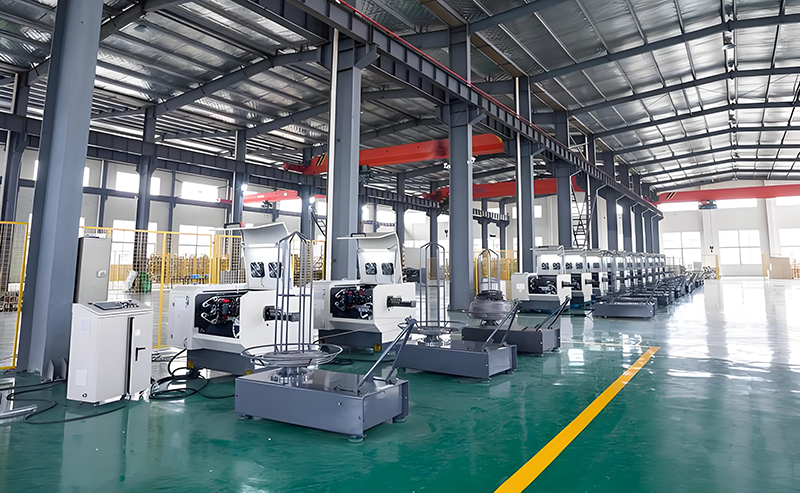
In industries such as construction, furniture manufacturing, and packaging, the demand for nails as basic fasteners remains consistently stable. The selection of a suitable nail making machine directly determines production efficiency, product quality, and profit margins. Whether you are a startup workshop or a large-scale factory, choosing the right nail making machine requires avoiding the pitfalls of "blindly pursuing high configurations" or "merely controlling costs." Instead, it demands a comprehensive judgment based on multiple dimensions including production goals, raw material characteristics, and site conditions. This article will break down the core logic of nail making machine selection and provide actionable decision-making solutions for producers with different needs.
I. First, Clarify Core Requirements: Avoid "Choosing Big Over Suitable"
The first step in selection is to clearly define production boundaries, which serves as the foundation for all subsequent decisions.
1. Lock in Product Positioning: Nail Type and Specifications Are Prerequisites
There is a strong binding relationship between nail making machine models and nail categories. Discussing selection without considering the product is like shooting in the dark:
Ordinary Round Nails: Suitable for general scenarios such as building decoration and furniture assembly, with specifications mostly ranging from 10~200mm and wire diameters from 1.8~4.0mm. A universal nail making machine is sufficient to meet the needs without additional special functions;
High-Strength Nails (concrete nails, steel nails, shooting nails): Need to penetrate hard materials such as concrete and steel, requiring nail hardness to reach HRC50 or above. Therefore, the nail making machine must be equipped with an integrated quenching and tempering device, and the mold hardness must be compatible with high-carbon steel/alloy steel raw materials;
Special Function Nails (corrugated nails, roofing nails, coil nails, threaded nails): Require dedicated models. For example, coil nail machines can directly produce coiled strip nails (compatible with pneumatic nail guns), and threaded nail machines need additional thread rolling mechanisms. These models are highly targeted and cannot be replaced by universal machines.
At the same time, it is necessary to clarify the raw material wire diameter range. Different nail making machines have significant differences in processing limits (e.g., 2.5mm upper limit for small machines and 6.0mm upper limit for medium-sized machines). Exceeding the wire diameter beyond the equipment's capacity will cause material jams, poor forming of nail heads, and even damage to the transmission system.
2. Plan Production Capacity Scale: Match Automation Level
Production capacity requirements directly determine the automation level and equipment investment of the nail making machine. It is necessary to reasonably plan based on order volume and delivery cycles:
Small-Batch Production (Daily Output ≤ 50,000 pieces): Suitable for semi-automatic nail making machines. The equipment has a simple structure (composed of feeding, cutting, punching, and mold components), requiring manual feeding and sorting. Priced at 10,000~50,000 RMB, it covers only 2~3 square meters, making it suitable for startup workshops and local scattered orders;
Medium-Batch Production (Daily Output 50,000~500,000 pieces): Fully automatic nail making machines are recommended. Equipped with coil automatic feeding frames, automatic counting devices, and finished product collection boxes, some models integrate polishing functions with a production capacity of 500~1,000 pieces per minute. No full-time personnel are required, reducing labor costs by more than 60%. Priced at 50,000~200,000 RMB, it is suitable for stable order production;
Large-Batch Production (Daily Output ≥ 500,000 pieces): A nail making production line is required, integrating wire drawing, nail making, quenching, polishing, sorting, and packaging processes to achieve unmanned operation. The production capacity can reach more than 2,000 pieces per minute, with equipment investment starting from 500,000 RMB. It is suitable for large factories, bulk foreign trade supply, or large-scale distribution in building materials markets.
II. Match Raw Material Characteristics: Ensure the Equipment "Can Handle" the Raw Materials
The processing efficiency and finished product quality of the nail making machine largely depend on the compatibility between the equipment and raw materials. Ignoring this will lead to rapid mold wear and low qualified product rates.
1. Raw Material Material Compatibility
Low-Carbon Steel Wire (carbon content ≤ 0.25%): Soft in texture, suitable for producing ordinary round nails. The nail making machine can be equipped with ordinary carbon steel molds, resulting in lower costs;
High-Carbon Steel/Alloy Steel (carbon content 0.6%~1.0%): High in hardness, used for producing concrete nails and steel nails. The nail making machine must be equipped with tungsten carbide molds (10~20 times more wear-resistant than carbon steel molds), and the motor power needs to be increased (e.g., a 7.5kW or higher motor is required for processing 4mm high-carbon steel wire) to avoid processing jams due to insufficient power;
Stainless Steel Wire: Used for producing rust-proof nails. The nail making machine must have anti-corrosion treatment (such as stainless steel body and rust-proof molds) to prevent raw material oxidation from affecting the appearance of finished products.
2. Raw Material Form Compatibility
Coil Steel Wire: With a length of hundreds of meters, it is compatible with the automatic feeding system of fully automatic nail making machines, reducing manual cutting links and improving efficiency;
Cut Steel Wire (fixed-length straight strips): Suitable for semi-automatic nail making machines. The coil needs to be cut into corresponding lengths in advance. Although it increases labor, the equipment investment is lower, making it suitable for small-scale producers with limited budgets.
III. Focus on Core Configurations: Judge the Equipment's "Hard Power"
The core configurations of the nail making machine directly determine production stability and product precision. The following 3 points should be focused on during selection:
1. Mold: The "Heart" of the Nail Making Machine
The mold is a key component that determines the forming of the nail head, the sharpness of the nail tip, and dimensional tolerances, and is also the most costly wearing part. Tungsten carbide molds are preferred due to their long service life (capable of processing 1~2 million nails), which can reduce mold replacement frequency (ordinary carbon steel molds can only process 100,000~200,000 nails), resulting in cost savings in the long run. At the same time, it is necessary to confirm whether the mold can be customized. Some special nails (such as special-shaped head nails) require exclusive molds to avoid inability to upgrade later.
2. Power and Transmission System: The "Power Source" of the Equipment
Motor Power: The larger the wire diameter and the harder the material, the higher the required motor power (reference: 4kW motor for 2mm wire diameter, 7.5kW motor for 4mm wire diameter, 11kW motor for 6mm wire diameter). Insufficient power will lead to incomplete forming of the nail head and dull tips;
Transmission Method: Gear transmission is more stable, quieter, and more precise than belt transmission, making it suitable for high-precision nail making needs, but the cost is slightly higher; belt transmission is simple to maintain and low in price, suitable for ordinary round nail production with low precision requirements. It is necessary to regularly replace the belt (to avoid slipping affecting processing).
3. Additional Functions: Enhance Production Added Value
Select necessary additional functions according to product positioning to avoid redundant configurations increasing costs:
Quenching and Tempering Device: Essential for producing high-strength nails, eliminating the need to purchase additional quenching equipment, reducing site occupation and secondary investment;
Polishing Function: The produced nails have a smooth surface without burrs, which can be directly used for foreign trade export or high-end building materials markets, increasing product prices;
Automatic Sorting Device: Eliminates unqualified products with incorrect dimensions and deformed heads, reducing manual sorting costs and ensuring qualified product rates.
IV. Calculate Costs and After-Sales Service: Avoid Late Risks
Selection should not only consider the equipment purchase price but also calculate long-term usage costs and after-sales guarantees to avoid "affordable to buy but unaffordable to use."
1. Equipment Price and Cost Composition
Machine Type | Price Range (RMB) | Daily Production Capacity (10,000 pieces) | Labor Requirement | Main Cost Items |
Semi-Automatic Nail Making Machine | 10,000~50,000 | 1~5 | 1~2 people | Labor, mold replacement, raw material loss |
Fully Automatic Nail Making Machine | 50,000~200,000 | 5~50 | 0.5~1 person | Electricity fees, molds, minimal labor |
Nail Making Production Line | Above 500,000 | 50~200 | 1~2 people (on duty) | Electricity fees, consumables, equipment maintenance |

 Send Email
 Whatsapp