
Wire Rod for Nail Production: The Foundation of Nail Quality and Selection Guide
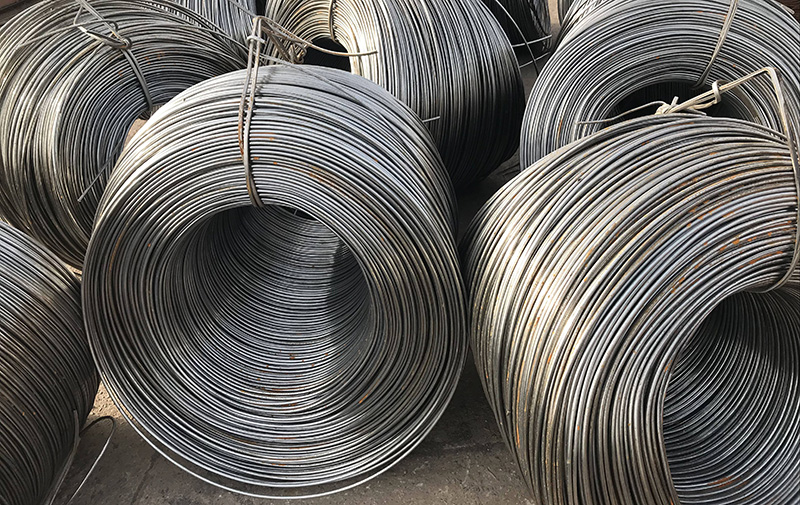
In the hardware manufacturing industry, nails serve as the most basic fastening components. Their core properties such as strength, toughness, and corrosion resistance are determined from the source by the raw material — wire rod. Wire rod is a round-section metal material rolled into coils after hot rolling. As the "first gateway" in nail production, its accurate selection and reliable quality directly affect the stability of subsequent processes including wire drawing, point forming, and head forming. Furthermore, they determine the service life and safety performance of finished nails in applications such as construction, furniture assembly, and industrial fitting. This article will thoroughly analyze the core characteristics, classification and selection logic, quality control key points, and processing adaptation principles of special wire rods for nail production, providing professional references for nail manufacturers and procurement practitioners.
I. Industry Positioning of Wire Rod for Nail Production: From "Raw Material" to "Foundation of Finished Products"
Wire rod is the core upstream raw material in the nail production chain, accounting for over 60% of the production cost of finished nails. Its role is far more than a simple "metal carrier" but a key factor determining the performance ceiling of nails:
For ordinary wood nails, the ductility of the wire rod directly determines whether it can be smoothly drawn and stamped into shape without breaking during processing;
For high-strength nails such as concrete nails and powder-actuated nails, the carbon content and mechanical properties of the wire rod are the core guarantees for achieving "penetration into hard substrates";
For rust-proof nails used outdoors, the material composition of the wire rod is the fundamental premise for resisting humid and corrosive environments.
Currently, the wire rods commonly used in the nail production industry are mainly steel, supplemented by special materials such as stainless steel and copper. Their production process has formed a standardized system — from iron ore smelting, continuous casting, hot rolling to coil packaging, the precision control of each process provides a stable foundation for nail processing.
II. Core Classification and Accurate Selection of Wire Rod for Nail Production
Different types of nails have significantly different requirements for the material and mechanical properties of wire rods. Blind selection will lead to a sharp increase in processing loss rate or substandard performance of finished nails. The following are the most common wire rod classifications and adaptation schemes in the nail industry:
(1) Low Carbon Steel Wire Rod: The "Cost-Effective Choice" for Ordinary Nails
Low carbon steel wire rod is the mainstream raw material in the nail production industry, with a carbon content range of 0.06%~0.22%. Core grades include national standard Q195, Q215, Q235, and American standard SAE1006, SAE1008.
Core advantages: Excellent ductility with an elongation rate ≥20%, capable of withstanding plastic deformation during multiple passes of wire drawing, and the connection between the nail shank and head is not prone to breaking during stamping; at the same time, it has low cost and is suitable for large-scale industrial production.
Adaptable nails: Ordinary round nails, wood nails, packaging nails, corrugated nails and other daily-use nails, widely used in construction woodworking, furniture assembly, carton packaging, decoration and other scenarios.
Selection key points: Focus on diameter accuracy (tolerance ≤±0.1mm) and surface smoothness to avoid uneven nail shank thickness caused by inconsistent diameter, or wear of wire drawing dies due to surface scars and scale.
(2) Medium Carbon Steel Wire Rod: The "Performance Core" for High-Strength Nails
Medium carbon steel wire rod has a carbon content between 0.25%~0.60%, with common grades such as 35#, 45#, SAE1045. Its strength and hardness are significantly higher than those of low carbon steel, making it an exclusive raw material for producing high-strength nails.
Core advantages: Tensile strength ≥500MPa, after quenching + tempering treatment, the hardness can reach HRC45~55, with excellent impact resistance and wear resistance, capable of easily penetrating into concrete, brick walls, hard wood and other substrates.
Adaptable nails: Concrete nails, powder-actuated nails, twist nails, self-tapping screws and other special nails requiring high strength, suitable for construction wall fixing, steel structure connection, outdoor facility installation and other scenarios.
Selection key points: Strictly control the content of sulfur (S≤0.04%) and phosphorus (P≤0.04%) to avoid "hot brittleness" and "cold brittleness"; at the same time, plan the annealing process in advance to reduce the wire rod hardness (hardness ≤HB180 after annealing) and improve processing ductility.
(3) Stainless Steel Wire Rod: The "Corrosion Resistance Guarantee" for Rust-Proof Nails
Stainless steel wire rods are mainly austenitic stainless steel, with common grades such as 201, 304, 316. The carbon content is ≤0.08%, and alloying elements such as chromium and nickel are added, providing strong corrosion resistance and rust resistance.
Core advantages: 201 stainless steel can meet the rust-proof requirements of general humid environments, 304 stainless steel has better corrosion resistance, and 316 stainless steel can resist highly corrosive environments such as coastal areas and chemical industry; the surface is smooth and beautiful, without the need for additional rust-proof treatment.
Adaptable nails: Rust-proof nails, outdoor special nails, kitchen and bathroom decorative nails, medical device fixing nails, etc., used in coastal buildings, garden facilities, high-end furniture, kitchen and bathroom appliances, medical devices and other scenarios.
Selection key points: Select grades according to the service environment — 201/304 for general humid environments, 316 for highly corrosive environments; pay attention to the cold working performance of the wire rod to ensure that it is not prone to cracks during wire drawing.
(4) Copper Wire Rod: The "Quality Choice" for Decorative Nails
Copper wire rods are mainly divided into pure copper (T2, copper content ≥99%) and brass (H62, copper-zinc alloy), with good electrical conductivity, oxidation resistance and retro aesthetic appearance.
Core advantages: Soft texture but strong toughness, the surface presents a natural metallic luster after processing without complex surface treatment; excellent oxidation resistance, not easy to rust and discolor after long-term use.
Adaptable nails: Copper nails, antique decorative nails, jewelry box special nails, ancient building restoration nails, etc., used in ancient building protection, high-end crafts assembly, decorative hardware and other scenarios.
Selection key points: Focus on the purity of copper content, the purity of pure copper directly affects toughness, while brass needs to control the zinc content ratio to ensure that it is not prone to brittle fracture during processing.
III. Core Quality Control Indicators of Wire Rod for Nail Production
Nail manufacturers need to establish strict quality inspection standards when purchasing wire rods to avoid potential production hazards caused by raw material defects. The core quality indicators include the following four dimensions:
(1) Diameter Accuracy: Determines the Consistency of Nail Shank Specifications
The diameter tolerance of the wire rod should be controlled within ±0.1mm, and the diameter fluctuation of the same coil of wire rod should not exceed 0.05mm. If the diameter is inconsistent, it will lead to uneven thickness of the nail shank after wire drawing, which not only affects the qualification rate of nail specifications but also causes uneven force during head forming, resulting in skewed or cracked nail heads. During inspection, a vernier caliper with an accuracy of 0.01mm should be used, and at least 10 detection points should be selected at different positions (head, middle, tail) of the wire rod to ensure that the overall accuracy meets the standard.
(2) Surface Quality: Avoids Fracture and Defects During Processing
The surface of the wire rod must meet the requirements of "smooth, crack-free, scar-free, scale-free, and rust-free":
Excessively thick scale will wear the die during wire drawing and even cause the wire rod to get stuck and break;
Surface cracks and scars will expand during the drawing process, eventually leading to cracks and fractures in the finished nail shank;
Rust will affect the adhesion of subsequent surface treatments (such as galvanizing, blackening), leading to the shedding of the rust-proof layer.
During quality inspection, each coil should be visually inspected, and if necessary, a steel wire brush should be used to gently brush the surface to check the adhesion of the scale.
(3) Mechanical Properties: Ensures Processing Feasibility and Finished Product Strength
Tensile strength: Low carbon steel wire rod should be 300~400MPa, medium carbon steel wire rod ≥500MPa, to ensure that it can withstand plastic deformation without breaking during wire drawing;
Elongation rate: Low carbon steel wire rod elongation rate ≥20%, medium carbon steel wire rod ≥15%, the higher the elongation rate, the better the ductility of the wire rod, and the better the forming effect during head stamping;
Cold bending performance: Low carbon steel wire rod should withstand 180° cold bending without cracks, and medium carbon steel wire rod should withstand 90° cold bending without cracks, to avoid fracture at the connection between the nail shank and head during head forming.
Mechanical property testing should be entrusted to professional laboratories and completed by tensile testing machines and cold bending testing machines. Each batch of wire rods should be sampled and tested.
(4) Chemical Composition: Controls Impurity Content and Avoids Material Defects
The chemical composition of the wire rod directly affects its processing performance and service performance. Core control indicators:
Carbon (C): Strictly control the carbon content according to the type of adapted nails, to avoid decreased ductility due to excessively high carbon content or insufficient strength due to excessively low carbon content;
Sulfur (S): ≤0.04%, sulfur will cause "hot brittleness" of the wire rod, making it prone to cracking during high-temperature processing;
Phosphorus (P): ≤0.04%, phosphorus will cause "cold brittleness" of the wire rod, making it prone to cracking at low temperatures or during stamping;
Alloying elements: Stainless steel wire rods must ensure that the content of chromium (Cr) and nickel (Ni) meets the standards, and copper wire rods must control the content of impurity elements (such as iron, lead) ≤0.5%.
Chemical composition testing should be completed by a spectrometer. Each batch of wire rods should be provided with a material certificate from the manufacturer and sampled for re-inspection.
IV. Processing Adaptation Key Points of Wire Rod for Nail Production
High-quality wire rods need to be combined with scientific processing technology to maximize their performance advantages and reduce production losses:
(1) Coil Form Adapts to Automated Production
Wire rods are delivered in coil form with a single coil weight of 500~1000kg. This form can be directly adapted to the continuous feeding device of automated nail production lines without additional cutting, greatly improving production efficiency. Enterprises should pay attention to the regularity of the coil when purchasing to avoid loose coils and messy wires, which affect the smoothness of feeding.
(2) Annealing Treatment: The "Pretreatment Key" for High-Hardness Wire Rods
Medium carbon steel wire rods and some stainless steel wire rods have high hardness and are prone to breaking when directly drawn. They need to be annealed before wire drawing:
Medium carbon steel wire rod: Heat to 650~700℃, hold for 2~3 hours, then cool slowly. After annealing, the hardness is ≤HB180, and the ductility is significantly improved;
Stainless steel wire rod: Adopt bright annealing process, heat to 1050~1100℃, and cool under a protective atmosphere to avoid surface oxidation, while reducing hardness and improving cold working performance.
The temperature and holding time of annealing treatment must be strictly controlled. Excessive annealing will lead to a decrease in wire rod strength and affect the hardness of finished nails.
(3) Wire Drawing Pass Matching: Avoid Excessively Large Single Reduction
The diameter of the wire rod needs to be gradually reduced to the target nail shank diameter through multiple wire drawing passes. The reduction rate of each wire drawing pass is controlled at 15%~20% to avoid wire rod fracture caused by excessively large single reduction:
Example: To produce a nail shank with a diameter of 2.0mm, select a low carbon steel wire rod with a diameter of 5.0mm. The wire drawing passes are 5.0mm→3.8mm→2.9mm→2.3mm→2.0mm, totaling 5 passes;
The material of the wire drawing die should match the wire rod. Tungsten carbide dies can be used for low carbon steel wire rods, and diamond dies for stainless steel wire rods to reduce die wear.
(4) Storage and Protection: Avoid Raw Material Deterioration
The storage conditions of wire rods directly affect their surface quality. Attention should be paid to:
Store in a dry and well-ventilated warehouse to avoid rust caused by humid environments;
Maintain spacing between coils to avoid extrusion deformation;
The storage time of low carbon steel wire rods and medium carbon steel wire rods should not exceed 3 months. Stainless steel wire rods and copper wire rods should be properly moisture-proof packaged to avoid surface oxidation.
V. Conclusion: Choose the Right Wire Rod to Lay a Solid Foundation for Nail Quality
As the core raw material for nail production, the selection and quality control of wire rods are the keys for enterprises to improve product competitiveness and reduce production costs. Nail manufacturers need to accurately match wire rod types according to their product positioning (ordinary nails, high-strength nails, rust-proof nails, decorative nails); establish strict incoming inspection processes to control quality from four dimensions: diameter, surface, mechanical properties, and chemical composition; at the same time, optimize processing technology to maximize wire rod performance and production efficiency.
In the increasingly competitive hardware industry, only by attaching importance to raw material quality from the source can we produce high-quality nails that meet market demand and gain a firm foothold in the industry. In the future, with the upgrading of nail production technology and the improvement of environmental protection requirements, new wire rods with low energy consumption, high corrosion resistance, and high strength will become the development trend of the industry. Nail manufacturers need to continuously pay attention to wire rod technological innovations and keep up with the pace of industry development.

 Send Email
 Whatsapp