
Key Differences Between Cold-Galvanized Iron Wire and Hot-Dip Galvanized Iron Wire & Selection Guide
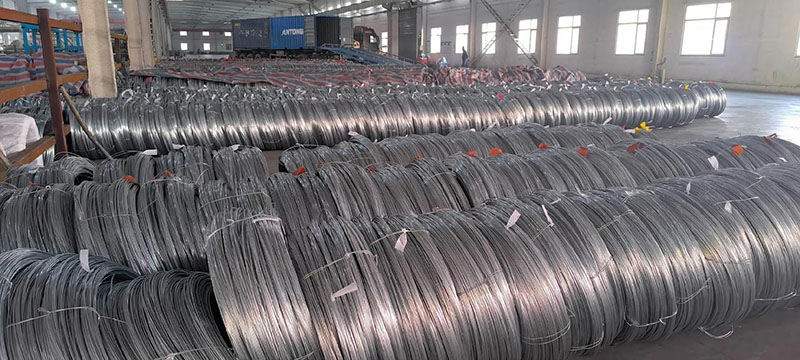
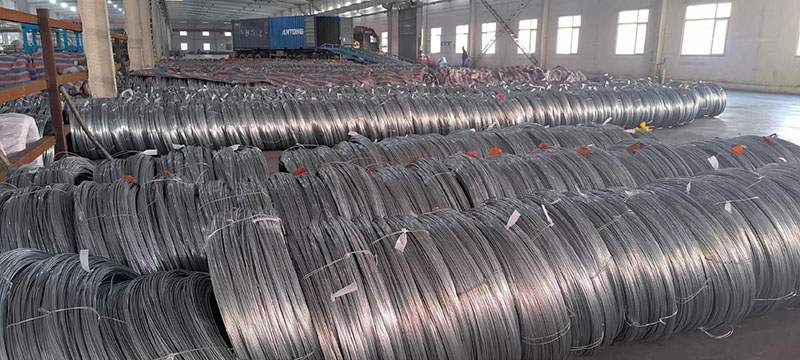
In the field of iron wire anti-rust treatment, cold galvanizing (electrogalvanizing) and hot-dip galvanizing are two of the most widely used processes. Although both use zinc as the anti-rust medium, their fundamental differences in process principles lead to significant discrepancies in zinc layer quality, corrosion resistance, application scenarios, and other aspects, directly affecting the service life and cost of the product. This article analyzes the differences from multiple dimensions to help readers make accurate selections.
I. Core Processes: Essential Differences in Principles and Procedures
The process is the root cause of all differences between the two, with the core distinction lying in "the way the zinc layer combines with the iron wire substrate."
1. Cold-Galvanized Iron Wire (Electrogalvanized Iron Wire)
Cold galvanizing adopts the principle of electrolytic deposition. The iron wire is used as the cathode and placed in an electrolyte containing zinc ions. By passing an electric current, zinc ions are directionally deposited on the surface of the iron wire to form a uniform zinc film. The entire process is carried out at room temperature without high-temperature heating, and the process flow is relatively simple: iron wire pickling and derusting → electrolytic zinc deposition → passivation treatment → drying to finish. Its core is "physical adhesion"—there is no obvious chemical reaction between the zinc layer and the iron substrate, and they are only attached to the surface by the action of an electric field.
2. Hot-Dip Galvanized Iron Wire
Hot-dip galvanizing adopts the principle of high-temperature immersion plating. After pickling and fluxing, the iron wire is directly immersed in molten zinc liquid (at a temperature of about 450℃). At this time, intense physical and chemical reactions occur between zinc and the iron substrate, forming a composite coating of "alloy layer + pure zinc layer." The process flow is more complex: iron wire pickling and degreasing → flux treatment (to improve bonding force) → high-temperature zinc immersion → cooling and passivation → finished product. Its core is "chemical bonding," where zinc and iron penetrate and fuse with each other to form a strong metallurgical bonding layer.
II. Key Performance: Comprehensive Comparison in Six Dimensions
Due to differences in processes, the two show obvious stratification in key performances such as zinc layer quality and corrosion resistance. The specific comparisons are as follows:
Comparison Dimension | Cold-Galvanized Iron Wire | Hot-Dip Galvanized Iron Wire |
Zinc Layer Thickness | Thin and uneven, with a conventional thickness of 5-15μm. Controlled by current and time, it is difficult to thicken. | Thick and uniform, with a conventional thickness of 60-100μm. It can be thickened to more than 200μm on demand by adjusting the zinc immersion time. |
Zinc Layer Adhesion | Poor. The zinc layer is physically attached and tends to peel off, blister, or even crack when bent, stretched, or rubbed. | Extremely strong. The alloy layer is closely integrated with the iron substrate, and only slight zinc layer cracking may occur when bent or collided, without easy peeling. |
Corrosion Resistance | Average. It can only resist mild rust in dry environments and is prone to rapid oxidation in humid, acid, or alkaline environments, with a short service life (1-3 years indoors). | Excellent. The double protection of thick zinc layer and alloy layer can resist harsh environments such as humidity, salt, alkali, and outdoor exposure, with a long service life (5-10 years outdoors, up to 10 years or more when buried underground). |
Appearance Texture | Smooth and delicate surface, presenting a uniform bright silver color with high gloss, good visual effect, and no obvious defects. | Slightly rough surface, presenting a matte silver-gray color, with possible natural zinc flowers (crystalline texture), which does not affect performance and can be optimized by smoothing treatment. |
Processing Performance | Thin zinc layer, good flexibility, easy to bend, cut, and weave, suitable for fine processing without easily damaging the zinc layer. | Thick zinc layer, slightly poor flexibility. The bending angle needs to be controlled to avoid zinc layer cracking, suitable for rough processing, and fine weaving is likely to damage the coating. |
Cost and Price | Simple process, low energy consumption, low equipment investment, affordable price, 30%-50% lower than hot-dip galvanized iron wire. | High energy consumption due to high temperature, complex process, and multiple procedures, resulting in higher cost and significantly higher price than cold-galvanized iron wire. |
III. Application Scenarios: More Efficient Selection on Demand
Combined with performance and cost, the application scenarios of the two are highly differentiated. It is necessary to make a reasonable choice according to the use environment and service life requirements to avoid waste or premature scrapping due to insufficient corrosion resistance.
1. Application Scenarios for Cold-Galvanized Iron Wire
Suitable for dry environments, short-term use, and low-cost requirements, including:
Indoor light bundling: such as carton packaging, commodity packaging, temporary fixing, etc., without long-term rust prevention;
Handicraft production: such as wire-woven ornaments and decorative shapes, relying on its smooth appearance and easy processability;
Temporary construction use: such as temporary fixing in indoor decoration, short-term binding wire for concrete pouring, which will be covered or replaced later;
Surface treatment of hardware accessories: used as a base anti-rust layer for subsequent painting and plastic coating to improve overall protection.
2. Application Scenarios for Hot-Dip Galvanized Iron Wire
Suitable for outdoor environments, long-term use, and high-corrosion scenarios, including:
Outdoor engineering construction: such as fence erection, greenhouse frames, power communication guy wires, expressway protective nets, etc., which need to resist wind and rain;
Harsh environment applications: such as water conservancy projects, port facilities, saline-alkali land planting, and components around sewage treatment plants, with high corrosion resistance requirements;
Long-term buried or exposed components: such as underground pipeline fixing, outdoor railings, breeding nets, etc., requiring long-term stable rust prevention;
Export orders: For outdoor use needs in Europe, America, Southeast Asia, etc., hot-dip galvanized iron wire is more favored due to its long warranty period.
IV. Supplementary Points: Pitfalls to Avoid and Optimization Suggestions
1. Optimization Methods for Cold-Galvanized Iron Wire
To improve the corrosion resistance and aesthetics of cold-galvanized iron wire, color plating can be performed (applying a color coating on the zinc layer). However, it essentially relies on the thin zinc layer, making it only suitable for indoor decorative scenarios and not for outdoor use.
2. Misunderstanding About Zinc Flowers on Hot-Dip Galvanized Iron Wire
Zinc flowers on the surface of hot-dip galvanizing are natural textures formed by zinc liquid crystallization during cooling, which have nothing to do with corrosion resistance and only affect the appearance. If a smooth surface is required, zinc flowers can be removed by subsequent smoothing treatment, with a slight increase in cost.
3. Core Principles for Selection
Prioritize determining the type based on "use environment + service life": choose cold galvanizing for dry indoor and short-term use (cost-effective); choose hot-dip galvanizing for outdoor, humid, and long-term use (easy to maintain and durable). At the same time, note that cold-galvanized iron wire is prohibited for underground or acid-alkaline environments, otherwise, it is prone to rapid rusting and breaking.
Conclusion
Cold-galvanized and hot-dip galvanized iron wires are not a matter of "superiority or inferiority," but of "suitable selection." Cold galvanizing excels in low cost and easy processing, meeting temporary and indoor needs; hot-dip galvanizing is superior in strong corrosion resistance and long service life, adapting to outdoor and harsh environments. Mastering the core differences between the two and selecting based on actual needs can ensure the use effect while achieving optimal cost.

 Send Email
 Whatsapp